…The fact that the CD rates in our retirement funds have not yet gone below zero. When interest rates go to zero, we may owe the bank money for the honor of their holding it. So what shall we do with our remaining assets to make sure we won’t end up having Thanksgiving 2020 in a church basement?
I had relatives who, during World War II, buried their money in Mason jars in the backyard. When they dug it up after the war, it was full of mold and they had to hang it out to dry. Moral of the story: no matter what you do with your retirement money, you will be hung out to dry.
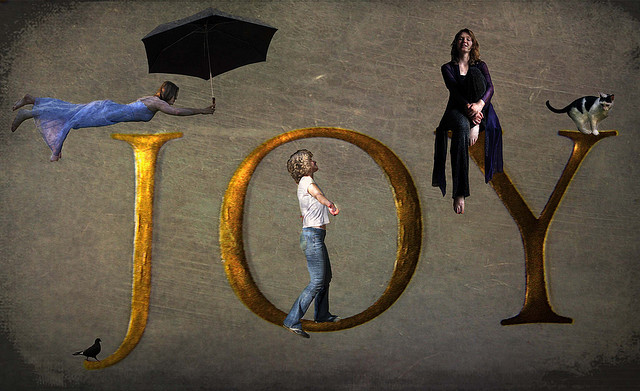
However, cynicism is like salt—just a touch is enough. Too much is bad for your mental health and we need all the mental health we can get. So let’s really really give thanks for….
Longevity and health—Yeah, yeah, our medical system is a mess, but we are living much longer than people did 100 years ago, when the average age of death was the late 40’s. If decades of life aren’t a huge gift, I’ll eat a turkey neck.
Life. What a gift. Thank you.
And how about that warm, well-lighted place we live in? Not under a bridge, not in a tent in Haiti, not in a refugee camp anywhere, but in a warm house, insulated in more ways than one.
Home. What a gift. Thank you.
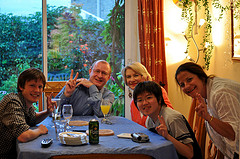
And then there are those around the table—that salty, nutty mix of family and friends who show up to eat in 20 minutes what it took 8 hours to prepare. Well, never mind. They are the ones who hold us up when we begin to sink, who let us know we are not wandering alone on the planet, but part of the Family of Man.
Family and friends. What a gift. Thank you.
And then there is the Internet, which is how we stay in touch, especially on holidays. It’s so busy today, in fact, that I can’t upload all the great photos I found for this post. Again, never mind.
Communication over the river and through the blog to grandmother’s house. What a great thing. Thank you.
And last, thank you for reading this when your mind is really on what to put in the stuffing. Is this finally the year for oysters?
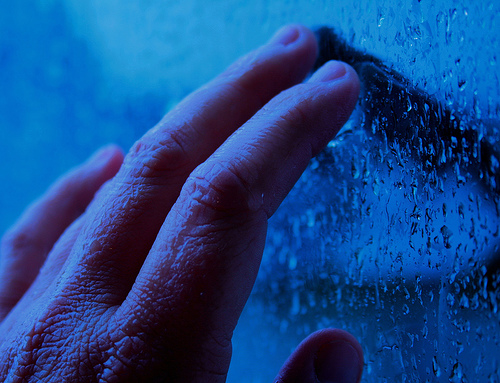
Moods come in all colors—black, grey and blue for starters. Am I the only one seeing more blue moods in the morning?
By D. Sharon Pruitt
Evidently not….
By Lainey Powell
Maybe it’s economics—the rates on retirees’ CDs are going so low, we’ll soon owe the banks money. Or maybe it’s being in a country where the politics are so partisan, it’s like living in the same house with a mom and dad who are always fighting and you can’t get out.
Whatever the cause, it’s no way to live and too many downer days have prompted me to review my favorite ways of slipping into something more comfortable in the way of moods.
Music…the most instant and effective mood changer I know. Put it on, leave it on, move to it, sing along. Listen in the car, in bed and secretly with a pair of earphones during boring lectures, waits in the doc’s office or on planes, trains, buses or walks. Jeremiah was and still is a bullfrog and to listen to Joy to the World will turn you into a rainbow rider. If it doesn’t, a pulse check is in order. Women can hide earphones under their hair and nobody has to know they are listening to iTunes.
By Laser Guided
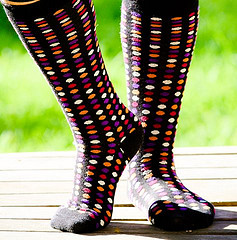
Clothes….Clothes make the mood. I should know. I’m a writer who gets up, starts to write and am still in a bathrobe and bunny slippers at lunch time, wondering why I don’t feel more professional. But to tell the real secret of clothes, it’s socks. Socks can be mood changers. The reveal of a red ankle cheers others up too, just like the 19th century—to say nothing of the uplift of even wilder patterns.
By Nina Matthews
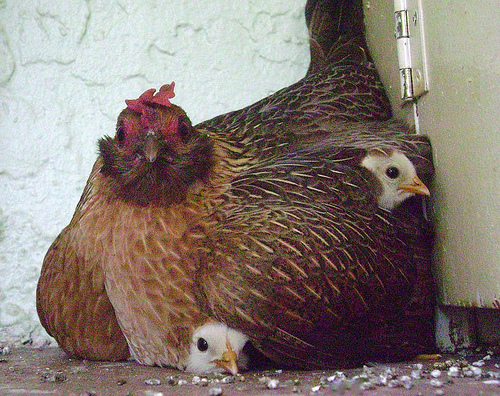
Animals…I borrow my animal uppers from neigbors right now—baby goats, donkeys, miniature horses and chickens. Dogs and cats are more usual and quite reliable as mood modifiers, but really, nothing can equal an anti-depressant as much as a good hen.
By Leoncillo Sabino
Perspective….We are lucky to live now, for space travel and Hubble images offer an unprecedented way to get comforting perspective—-visual and emotional. Google NASA’s picture of the day to see how tiny we humans are. Or just contemplate the image of the Earth from space. Others may get the creeps from knowing how insignificant humans are, but it cheers me up to know we are not the be-all and end-all, but just dinky dots on a very pleasant planet.
By NASA Goddard Space Flight Center
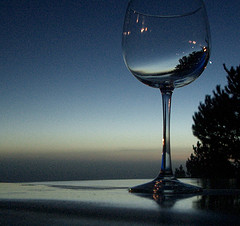
Relaxing after a hard day’s mood…If you don’t have trouble with alcohol and don’t take meds that can’t pair with booze, then one nice glass of wine at the end of the day might improve your mood. (Much more can ruin both health and mood.)
By Steve Jurvetson
Today, the old thing about never drinking alone is pretty much out the door when you have a population of older widows or single women who want to relax over a glass of wine. What are they going to do? Go out and bring in a passerby so they can have drinking buddies? No, I have news for the “never drink alone” people. Every older woman I know who lives alone and enjoys wine also drinks alone….either before dinner as she cooks or with her Trader Joe’s entree. We are not talking about women at risk, unless it’s the risk of relaxing.
Dancing…I do something I call Dopey Dancing, just moving around to music in a stupid way in the family room. Others ballroom dance, tap or line dance to get the exercise, another predictable mood elevator. Sometimes just watching other people dance can get the good vibes going as my friend Judith reminded me this morning, sending a short video of great dances from the movies.
So, if you want to shed a blue mood or improve a rosy one, click here on Judith’s prescription:
Maybe you already suspected this, but docs think you don’t know much about herbal medicine. And, in a recent survey reported in Drug and Therapeutics Bulletin, they also admit they don’t know much about natural remedies either. They perceive botanical illiteracy on both sides and they are right. Most of us couldn’t tell a ginger root from a day lily bulb.
It’s not always been this way. People grew their own pharmaceuticals. Their pharmacy was called a garden and, in much of the world, botanicals are still the basis of medical treatment. And, though people don’t know it, much of our own “mainstream” medicine comes from the earth. Aspirin is derived from the willow tree and the early contraceptive pills came from the Mexican yam.
By Peter Guest
Luckily, in some first-word countries today—not the US— there are doctors who actually study botanical medicines in school and use them regularly in their practice. In Germany, botanical medicine is taught in medical schools and that knowledge is tested in the qualifying exams. Seventy percent of German doctors prescribe botanicals and these medicines are reimbursed by their public health insurance program.
Where to find information when you live in Botanical Dum-Dum Land
All Americans should be better informed about botanical meds. Some of these natural treatments work very well, without the expense and side effects of prescription drugs. The caution here is that there are sleazy products and sleazy people promoting all kinds of “natural” treatments, so the consumer has to weed out the the good from the bad.
Luckily, there’s at least one doctor in this country who has studied botanical treatments and is also up on the latest in higher tech medical advances. He is Dr. Andrew Weil, graduate of Harvard Medical School and a scholar of natural botanicals. He has a foot in both worlds and practices integrated medicine.
Dr. Weil is the reliable source of information about what to take for what condition–what plant or supplement helps with colds, infections, high blood pressure, arthritis and the many other ills that flesh is heir to. He tells what natural product to take, how to take it, the actual doses, what to watch for, when not to take it and what prescription drugs don’t mix well with the botanicals.
Find this treasury of information at http://www.drweil.com. On the home page, click on Supplements & Herbs. There’s your little home companion to basic botanical medicine and if your doc needs info about how an incoming cold can be warded off with garlic, that’s the spot.
Will you be believed? I don’t know and have given up trying to convert those who don’t want to know. As someone said, it is hard to convince anyone of a fact when his occupation depends on his not believing it. What I do know is that garlic wards off my incoming colds if I get to the garlic fast enough.
And yes, I still get kissed. And while I’m at it, Happy Wedding Anniversary to Cranky Pants.
Do we hold on to stuff or does stuff hold on to us? So many people drown in their possessions, I believe stuff has a gravitational pull, power to suck us down into buying, holding, hoarding and then adding more.
By Betsy Fletcher
And family photos have twice the gravitational pull of other material things. If the Internet hadn’t come along as a place to store family photos, the USA would be covered coast to coast in pictures of Johnny’s first birthday and Jenny’s recital.
Why does it happen?
Each of us has an Inner Hoarder and each Inner Hoarder has a reason. For my parents—it took two of us more than six weeks to clean out their house—it was all about The Depression. In The Depression, there wasn’t enough stuff–even soap and toothpaste were precious, so my parents held on to everything, even last month’s newspapers. And I’m still holding on to some of their stuff, but for a different reason.
The thing isn’t the person
I think I am confusing the possessions of a person with the person. If I give away the old books my mom collected, I will be giving away my mom. Well, at least being disloyal to her.
This is nutty thinking, or more accurately, nutty non-thinking, but I think I have a solution. I will keep one or two of them—a little curtsy to mom—and give the rest away to our local library so someone new can enjoy the words. A simple win, win.
Objects of someone else’s desire
When you give something away, you can console yourself with thoughts of the further adventures of the object. Who will read, wear or use it? I write little short stories in my head about where things will end up. Usually, my stories have happy imaginary endings and sometimes, real happy endings, as with the many bookcases that have ended up in the offices of our local hospice.
And that is one way to cut loose from the magnetic power of stuff—think of the other people who could use and appreciate it. And the process is certainly green–recycling and keeping stuff out of the landfill, a destination my garage has been mistaken for.
Judging the stuff of others
Cranky Pants and I are gearing up for a move to smaller quarters, the downsizing of the geezer class. Of course, what I keep are the necessities, while what he keeps are sentimental objects. Then, after I finish judging his supposedly foolish choices, I say a little prayer of gratitude when I realize the sentimental choice he holds onto is me.
The joy of simplicity
Friends don’t let friends move without good wishes and casseroles served with side dish testimonials about how good it feels to be free of stuff because they’ve done it themselves. Friends are coming forward now to say they’ve stripped themselves of possessions and are happier for it.
Skip and go naked when it comes to stuff—that’s their advice and I believe it for everything you own owns you. You have to fix, polish, insure, repair, arrange, dust, wash and generally look after what you own. There are better ways to spend the rest of our years on the planet.
So, though I am not getting rid of everything, I am going around the house selecting what really really matters and trying to develop a let-it-go attitude about the rest. Think about it. There aren’t self storage units in heaven. Your kids will just throw it out or give it away, so we might as well say goodbye to all the boxes now.
Truth to tell, I expect to be relieved—the happiness of a light backpack. Is that joy I see around the next corner of life?
The important pleasures of childhood were playing outside on summer nights under the streetlights, going swimming, riding bikes and, now that I think of it, not having to cook. (No wonder people love their mothers—a personal chef on the premises.)
The important pleasures of mid-life were mostly private.
By Mario Annunziata
But what about the important pleasures of age? What are they?
Each of us has personal answers and it’s fun to mull them over and come up with a list. Here are mine and may this list set you off on your own quest:
You no longer have to do what the other kids do. One of the gifts of age is growing a mind of your own. Not that you didn’t have it before, but now the mind is more sure of its own thoughts. Independence has strengthened over the decades because you’ve found that much of what you were taught about life turned out to be untrue. (Despite what you were told, good guys don’t always win and nothing bad happens if you wear white shoes before Memorial Day.)
So, yes, later life is a wonderful time to use and polish the First Amendment and the nice thing is, you can’t wear it out. It’s like old silver…the more it’s used, the better it is. So we Americans can say just about anything without being tarred, feathered or fired.
Now, if you wonder why this freedom comes into full bloom in later life, it could be that you have retired and escaped from the worker box, the parent box and all the other boxes of life. (I don’t know one single person past 60 who considers herself in a box labelled “senior”.) And once you are out of a box, thoughts loosen and run free and the tongue along with them.
Some people think this is crankiness of age. I think it is the honesty of age. If you aren’t going to tell the truth about life now, when will you?
Another important pleasure of age: That’s the experience of appreciation, of gratitude for still being alive on a tiny planet in a huge universe with other humans who have been afforded the same miraculous privilege. Every day in every way I grow more grateful for what I have and do and did.
So what…you may say. This is pleasure? Somehow it is. Gratitude has a calming effect–like sitting in the autumn sunshine with one perfect cup of tea.
By St. Groove
I wouldn’t be surprised if blood pressure goes down when people count their blessings. Earlier in life, I didn’t have time to count my blessings, only time enough to count the kids in the station wagon. Were all aboard? Which gets me to my third important pleasure, family….
There are probably some people on the planet whose families have given them more trouble than mine and I’d surely like to go out to coffee with them to compare stories. You name it and family has given me grief–yes, ancestors, peers and descendants. Murder, mayhem and madness to start. Yet despite this, I consider my family one of my greatest assets. Yes, my dad deserted us in the Depression, but it was he who later showed me that life was larger than living in a factory town in Connecticut. Yes, my first husband and I divorced, but he stuck by his kids all these years. Also, he, a devoted fisherman, has helped me thru life by telling me long ago that I was like—no, not like a rose—but a fishing line.
By Dave F.
He said a fishing line looks pretty and graceful moving through the air over the water, but when big pressures pull it down, it holds. That one compliment sustained me through hard times. What a gift.
And so it goes with almost every family member. Each has given me a gift and they continue their charity. One gift that keeps on giving is that I can be myself with them—totally, completely, without reservation. They accept me and I can relax into myself in way that doesn’t happen in other situations.
By Jamie Henderson
I guess appreciating family is a pleasure of growing older because I was not insightful enough when I was younger to notice that I sit in a ring of comfort. Or maybe it was that I never sat. Busy mothers don’t sit.
Now, this post is certainly straying into the personal, but that’s the nature of a diary, geezer or not. However, after writing 233 columns about aging and health for a newspaper over the last few years, writing a personal blog now seems to be—well—too personal for someone whose habit is more journalistic.
However, this post is intended, not to inform, but to send you on a quest to find your own important pleasures of age. Please consider using the comment section below to post your own thoughts on the subject. Just know what you post about your pleasures may be read by all my other readers. But if not the truth now, when?
Older people, if they move from the family home—-the one where the dog died—-typically do it at two defined times. They may first get the urge to move when they are newly retired and want to trade in the bigger house for a smaller one and maybe take a fling at a geographic adventure. This is when folks move to Arizona, Florida and various Del Webby places. No ice to fall on. Flowers in the wintertime. Yesssss!
By Kevin Dooley
Later in life, when people are in their 70’s on up–deep into the pill-taking stage—they may want to be nearer adult children. Someone to watch over me and so on.
They pick the child who seems most interested in parental welfare and move closer.
Whatever the reason for the move—snowbirding or hoping for a little help through later life—here’s what to think about. Begin with this basic:
The truth about today’s real estate market is that people may need tranquilizers the size of horse pills when they find out what their house is currently worth. Oh, the horror of a 40% drop in value. That’s when people will need to make a decision whether to still try and sell or maybe rent or actually forgo the winter tan and stay put. However, what will encourage them to sell is that there are great bargains to be had at the other end of the move. The prices of houses in sunny places—think the gambling cities of Nevada—have fallen fast and long. So a lateral move from diminished price home to diminished price home is more palatable. Well, not really palatable, but maybe swallowable if you hold your nose.
Also, when imagining a new home, people need to think about what kind of environment makes older people happy and healthy. Scientists have looked at this issue and come up with the following points, all of which make sense to me as I feel my way through my own life. So here’s what to keep in mind—
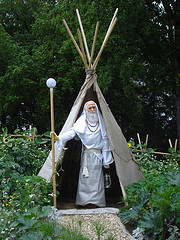
First, go for a home that is near people—you will need a social life–and near services for seniors. Do not go for an isolated home in the boonies even if you can get the acreage for a song. We who are older don’t need to go back to the earth 20 miles from town. We are past the tepee stage of life.
by Fergie Lancealot
I give this anti-islation sermon to Cranky Pants, but he still wants a fishing cabin in the wilderness. I say get it out of your system on vacation and send me smoke signals about how it’s going back there at the trout shack.
Second, look for good medical care. That means the doctors there will still take new Medicare patients and the hospital has a good rep. If you want to know about specific doctors, ask a nurse. Nurses know the scuttlebutt about who is a prince and who a pain in the stethoscope.
Third, look for decent nearby shopping which could include farmers’ markets to get healthy veggies and fruits and and maybe a Trader Joe’s to fill the grocery cart without paying a king’s ransom and yes, a drug store, preferably one with short lines at the prescription counter. (We now have one where the lines are so long, they find the dehydrated bodies of seniors lying in aisles at the end of the day.)
Fourth, look for good public transport systems. You may be driving now and can’t imagine the day when you hang up the car keys, but begin to imagine. How many 90-year-olds are still driving? And don’t you hope to be 90 plus? So, a good public transportation system is something to look for. It means you don’t have to drive to shopping, medical care and movies. You are chauffeured, m’dear.
Fifth, look for a place that is walkable. If there is anything we learn from other people and other cultures where longevity is routinely achieved, it’s that these people walk. Walkable means out of traffic, pretty flat, without lots of high curbs, hidden bumps and iffy sidewalks upturned by tree roots. Some people use malls and parks as a walking place. Others are lucky enough to step outside their doors into an easily-walked neighborhood or even onto nature’s walkway, a beach. On the other hand, even New York City is walkable. My father walked all over Manhattan and lived into his 90’s, still walking until called to higher places.
Sixth: Stairs are not senior-friendly. Sometimes we go down the stairs head first, so look for single level homes. Young seniors down-sizing to townhouses often forget that two levels will not do when they are recovering from knee surgery later on in life. How long can you sleep on a couch when you can’t make it up the stairs?
Take-away thoughts: The basic task of choosing a new home after 60 is to imagine specifically what you’ll need as an older person. Because if you take care of yourself, you will get older and you don’t want to be out of luck then when it comes to location and services. The other important thing is not to have a nervous breakdown when you come up against the realities of the current real estate market. At least don’t break down alone. Call me and we’ll scream together.
I’m deeply, truly anxious over the health care crisis in the US, a problem that exists on a federal level—-too much money thrown at too few results—and, often, on a personal level, too much food thrown at people who are too little exercised.
But there are two down-to-earth solutions.
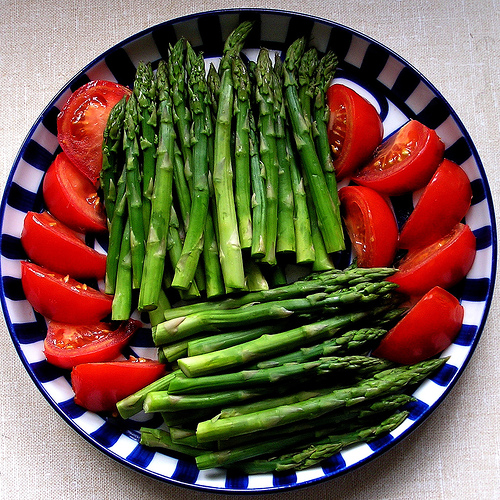
Veggies…can’t get more down-to-earth…
By Liz West
And…
By Kekka
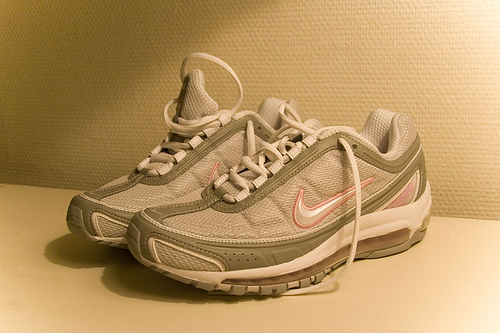
Sneakers, also literally down to earth.
Well, maybe I’d better explain or better yet, let Doctors Deepak Chopra, Dean Ornish, Rustum Roy and Andrew Weil explain it for me. These four champions of holistic lifestyles once nailed their views to the cathedral door in a Wall Street Journal article claiming that so-called alternative, holistic medicine was now mainstream and it was the drug-reliant, surgery-happy establishment medicine that is questionable today.
OK, they were more diplomatic—and they really are for integrating mainstream medicine that works with alternative modes that work and so am I. But they and other experts today are making a strong case for preventing illness in the first place through lifestyle changes such as a good diet—that’s the veggie part—
—and exercise—hence the sneakers.
Still, people have trouble believing that such simple affordable things can keep them out of the hospital and out of medical trouble, but it’s true. As the four experts say: “The evidence is mounting that diet and lifestyle are the best cures for our worst afflictions.” And one of their goals is to move the US medical system from disease care to real health care and disease prevention. It’s cheaper, safer and it works. What else could we ask for?
The High Cost of Staying Stuck Where We Are
So why are Americans coughing up almost $100,000 for each coronary bypass procedure to the combined tune of 44 billion dollars a year? And why do we pay close to $50,000 for each angioplasty to the combined cost of 60 billion a year?
Because we don’t believe simple prevention works? Because lifestyle change takes a little thought? It is, after all, easier to open a package of chips than to steam veggies—easier to push buttons on the remote than to push oneself to walk.
I don’t know all the blocks to good health behaviors, but thanks to recent studies, I do know what doesn’t work, at least when it comes to heart health.
(Prepare to be surprised.)
What doesn’t work are expensive, invasive operations on the cardio system. Here are the facts as published in the New England Journal of Medicine and summarized by the four health professionals in their Wall Street Journal article: Angioplasties and stents “do not prolong life or even prevent heart attacks in stable patients (i.e., the 95% of people who receive them). Coronary bypass surgery prolongs life in less than 3% of patients who receive it.”’
Wow. We don’t get what we are paying for.
So I think it’s time to stop the stupid behavior, especially mine own. For me now, it’s 45 minutes a day walking……
By Sister 72
….and 5 to 9 servings of fruit and veggies, no matter how many faces Cranky Pants makes about plants on his plate. (Tip: if you have juice for breakfast and heap your cereal with 1/2 cup each of 2 kinds of fruit—think berries and bananas—you have 3 servings in the bag before lunch.)
And, looking at the future high costs of Medicare and the fact the Feds are broke, I ask myself what will happen when taxpayers begin to wonder why they should subsidize older people with bad lifestyles who incur high medical expenses through Medicare. It is time to bypass the bypass lifestyle—which now relies on surgeries and drugs to make up for our foolishness. Certainly, as noted above, heavy medical hitters such as Chopra, Ornish, Roy and Weil think it’s time for a sea change in how we think about health. Let’s preserve and foster health rather than fixing it after a series of bad lifestyle choices.
So it’s veggies and sneakers. And as the sign below says: Give peas a chance.
PS…Please see below about the new direction of my columns….
Give Peas a Chance by sneakerdog
Alert & Action:
August 31 will be my last column in the Union newspaper. Instead, I will be writing here about all aspects of growing older, not just health. So if you want to keep on reading my columns, you can check http://www.geezerdiary every week or just google the words geezer diary. Or, easiest, you can subscribe and have a column emailed to you every week with my best wishes and thanks.
Just go to the home page of this blog, scroll down the right hand side and click on subscribe. Tell a friend if you like it.
Natch, I do not sell or share your info. Maybe I’ll think up some way to use it myself, but I doubt it. Thanks.
Mel Walsh, Geezerina
Last and sadly, Rustum Roy, scientist and champion of integrative medicine whose writing was mentioned above, died this week at age 86. Thank you, Dr. Roy, for your contributions to our thinking about the pathways to health.
If a doctor told you that every time you went to a high-decibel music event, you might lose a bit of vision, would you swear off concerts?
By DeusXFlorida
Or if a researcher said that your music player and in-ear buds could make you visually impaired, would you shrug it off and still go for the high volume?
My guess is that you might change your life and your listening habits. After all, who wants to go blind?
Well, evidently some people are willing to go deaf because they continue the lifestyle of the loud and thunderous even though docs say that continued high volume noise is literally deafening.
Making sense of ear-splitting behavior
I try to understand why so many people refuse to listen to medical experts about the connection between ear-splitting noise and hearing loss. Last week, the Journal of the American Medical Association even reported that one in five teens was already experiencing some hearing loss. So teens are losing it and they are just in the first quartile of life!
My guess is that people blow off hearing loss because they just can’t imagine it. After all, it is hard to pretend to be a deaf person. On the other hand, it’s easy to know what it would be like to be blind. Just close your eyes. That’s an immediate, dramatic sensation. But possible hearing loss isn’t as easily dramatized. And if you can’t see a threat, you tend to discount or ignore it. (Case in point: global warming.)
Whatever the cause of indifference, it’s obvious that people continue to go to loud movies, to deafening concerts and to turn up their music players to number 10 on the volume dial.
Four things to do
First, besides nagging your children and grandchildren—you can tell them to listen to their music through noise-cancelling headphones.
By Jek Bacarisas
The usual little buds people put into their ears don’t block out the surrounding noise, so people turn the volume way up so they can hear over the jet engine, the traffic or the bus. But noise-cancelling headphones block out ambient sounds so music can be played at lower volume.
Second, you can protect your own ears by carrying earplugs. I always have a pair in my purse for loud movies and sound systems. I used to tear up Kleenex and stuff it in my ears, but I looked like Peter Rabbit….so I upgraded to real earplugs which cost almost next to nothing at the drug store.
Third, avoid the predictable situations…going to concerts where the drum is so loud you can feel it in your feet or sitting right in front of a sound system or running mowers and blowers without ear protection. (My vacuum sounds like a jet engine and I use noise-cancelling headphones to do housework. OK, I look like a dork, but better dorky than deaf.)
Fourth—this involves nagging again—you can implore the hearing-impaired person in your life to get past the usual denial stage and buy hearing aids. (I have wondered if the high-volume TV needed by the hearing-impaired is deafening their housemates.)
And here’s one last thought about high-volume TV listening or booming music playing—-maybe it’s like smoking. You don’t do it near loved ones.
Help me out here. Is there a good word for older adults?
Seniors?
Older adults don’t call themselves seniors unless they are trying to get a cheap ticket to a movie. And I hesitate to call myself a senior because, when it comes to naming the stages of life, I don’t see any freshmen, sophomores or juniors. So it seems weird to have a stage all out there by itself called “senior”.
An online group of my friends known as The Sister Listers tackled the issue a while ago and we couldn’t come up with any name for older women besides crone, which we didn’t like because it makes us seem like witches cooking up a batch of lizard guts and mouse tails.
Look in Roget’s Thesaurus and you get hit with words that carry the old ageist stereotypes — withered, ill, doddering, feeble, withered, decreit, infirm and other negative words that I hope Mr. Roget didn’t really mean. (His thesaurus was published in 1852 when he was 73 and maybe seventy-somethings felt that way in the 19th century, unlike the 70-something who visited this morning to invite me to go kayaking. Different times, different realities. Thank god.)
There are other words, most of which don’t hack it: Golden-ager, senior citizen, elder, granny, gramps, old-timer, codger, old bag, or how about Yeats’ “a tattered coat upon a stick”? Phooey.
Which is why I finally settled on this diary being called The Geezer Diary. To me, geezer was the least obnoxious word and it does make people laugh out loud when I tell them what I’m writing. But, if I could find something else, I might use it.
What should others call us?
Some media fight ageism by not using any of the above terms, including the bland “senior”. They report by giving the gender—man or woman–and then giving the age with no other comment. (If you’re interested in this issue, go to http://tiny.cc/ygfdo.)
Still, I wish there were something better and maybe we have to invent it. My friend M. suggested “Vintage Venus”, which brought to mind all kinds of pleasant associations—myself promoted to Venus level for one—but I could not imagine asking for a Vintage Venus discount at the movies.
Photo: Kevin Dooley
Anyhow, feel free to comment with your own suggestions below. I will read every one.
If I could attach a 911 red siren alarm to a recommendation on my blog, this would get the flashing light. If you get no other tip from The Geezer Diary, let this be the one. It’s about how you may choose to graduate from the planet.
Graduating from the Planet--Photo by NASA Goddard
Wonderful writer, surgeon and general genius of thought, Dr. Atul Gawande, has written another of his gems for the August 2nd issue of the New Yorker. Its title is: Letting Go, What should medicine do when it can’t save your life?
Dr. Gawande tells the stories of very ill people who made very different choices about how they would spend their last months on the planet. He focuses on people who had a good end—peaceful, without pain and with family—and people who died with a pitiful quality of life. Each story is riveting and instructive. What I got from it is that if I get a downer diagnosis, I will get myself into a hospice program as fast as my lame little bod will carry me.
For those who do not know, hospice is now a world-wide program that offers tender loving end-of-life care to people who are graduating from the planet and to their families. (It’s a team effort.)
From what I’ve seen with several dying friends, from hearing the experiences of others and from interviewing hospice staff and volunteers, hospice is the way to go out—not with a bang, not with a whimper—but with some peace of mind about the last great happening of life. Hospice provides pain control, control of symptoms, nursing care, personal care, emotional and spiritual counseling, medical equipment and bereavement counseling.
For my friend, Joan, dying of COPD, having hospice at her home was the way to enjoy her friends and family as she made the next journey. I saw Joan 48 hours before she died. She was looking forward to her evening martini and fell asleep holding my hand after a very pleasant and funny conversation. Joan was so impressed with hospice, she told her friends:
Photo: Kjunstorm
Don’t send flowers, just send money to hospice.
Another friend of mine, S., whose husband used hospice in his final months said that she never again would be afraid of death, so comforting were the hospice counselors. So the benefits of the program extend to family and friends, both before, during and after someone’s departure.
Hospice is free. Regardless of income, the service is available, usually to people whose doctors have given them 6 months or less, though my local hospice has a transitions program for people whose prognosis is one year or less. To find a local hospice, just put the name of your town and the word hospice into the Google search box.
But Dr. Gawande’s article is what you need to read, not this. He talks about this subject so forcefully that when you’ve finished reading, you realize this knowledge can change your life and how you choose to leave it.
Where do I find this article?
August 2, 2010, New Yorker, pages 36 -49. Also currently online at http://tinyurl.com/34k3ymt, but I don’t know how long the magazine displays its current articles. You can surf there now—or get to a library or a magazine stand. As for me, I keep my New Yorker subscription going just for the occasional pieces by Dr. Gwande. (OK…. and for the cartoons.)
I want to end this alert with one surprising point from Dr. Gawande: Some of the people who used hospice, who gave up aggressive treatments and instead focused on staying pain-free and enjoying their remaining time, lived longer than those who were using heroic measures such as repeated chemos, many surgeries and other Hail Mary procedures. As Dr. G says, “The lesson seems almost Zen: you live longer only when you stop trying to live longer.”
Image of the heavens by nasa1fan/MSFCPhoto: Jackol/Flickr

















 Mel Walsh...Words for the Wise